Grain Storage: How to Protect Your Harvest
Grain storage is a critical step in the agricultural process, ensuring that the hard work of growing and harvesting is not wasted. Proper storage preserves grain quality, prevents spoilage, and extends shelf life, making it essential for both farmers and the food supply chain. This post will explore key strategies for effective grain storage and the benefits of getting it right.
Why Proper Grain Storage Matters
Grains are vulnerable to a variety of threats after harvest, including moisture, pests, and temperature fluctuations. Without proper storage, these factors can lead to significant losses:
Preventing Spoilage:
Grains with high moisture content are prone to mold and bacterial growth, which can spoil the entire batch. Proper drying and storage conditions are crucial to prevent this.
Preserving Nutritional Value:
Grains are rich in nutrients, but improper storage can lead to nutrient degradation, reducing their value as food and feed.
Maintaining Market Value:
Well-stored grains retain their quality and can be sold at a better price. Conversely, poor storage can result in a loss of market value due to spoilage, discoloration, or insect damage.
Benefits of Proper Grain Storage
Extended Shelf Life: Well-stored grains can last for months or even years without significant loss of quality.
Cost Savings: By preventing spoilage and loss, effective storage reduces the need for additional investments in new grains.
Food Security: Proper storage ensures a steady supply of grains, which is critical for food security, especially in regions prone to shortages.
Monitor Grain Storage with AgroLog
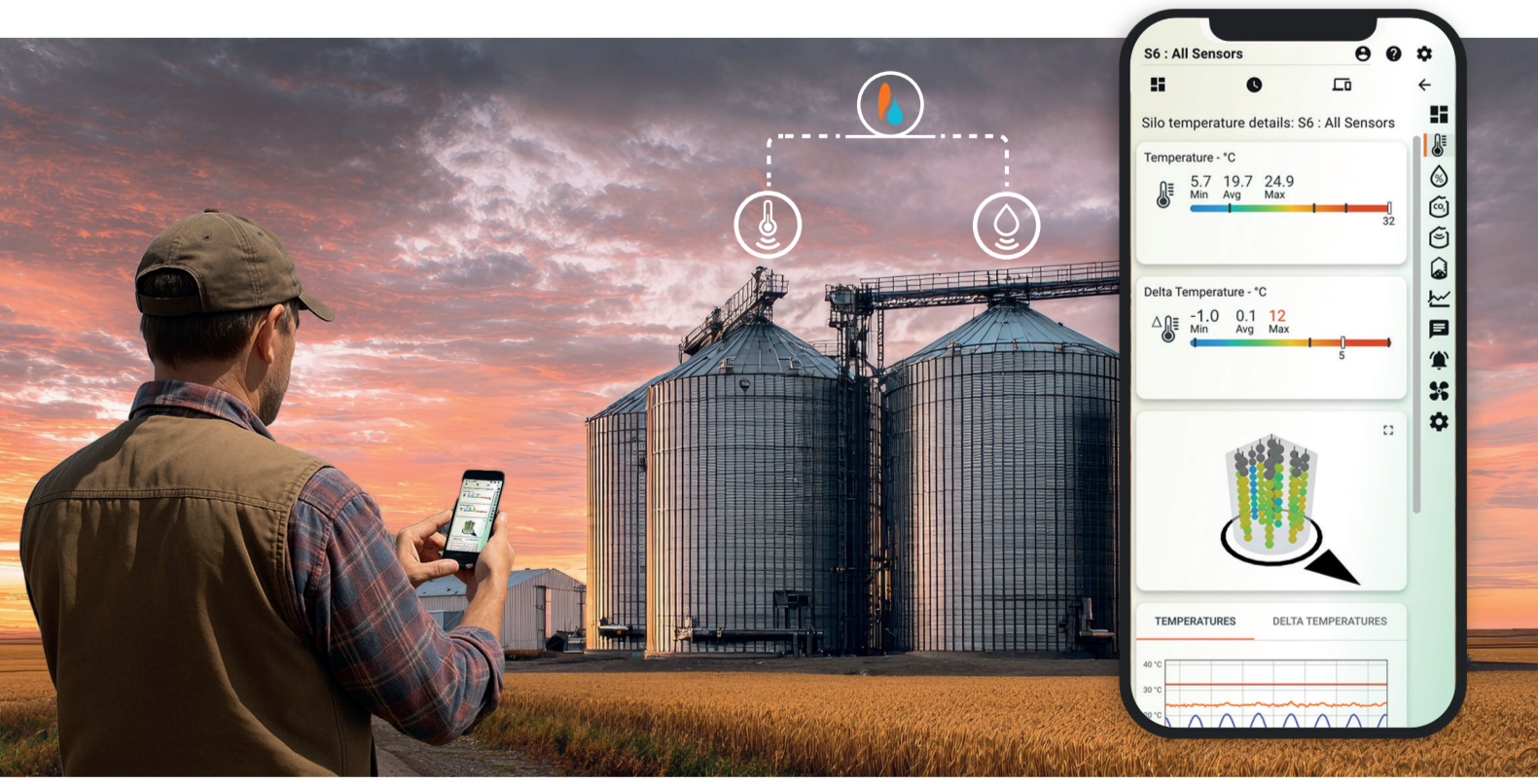
AgroLog Grain Bin Monitoring System is a powerful solution for managing grain storage in bins and silos. By combining precision hardware with real-time data, it ensures your grain stays in top condition and maintains its maximum market value. Here is a breakdown of the specialized sensors that power the our Grain Bin Monitoring System:
Temperature Monitoring: Experience maintenance-free tracking with customizable line lengths and sensor counts that feature zero temperature drift over time. These ATEX-approved cables offer simple and easy installation.
Moisture Monitoring: Gain accurate moisture and temperature measurements with cables customized up to 30 meters. They are ATEX-approved and calibrated for all common grain types to ensure maximum safety and accuracy.
Inventory monitoring: choose between CLM Radar, CLM Bob or Temperature Sensor Inventory system, which converts standard temperature readings into automated 3D surface models in order to track your inventory volume visually.
Headspace Monitoring: Track CO2 levels, temperature, EMC, dew point, and relative humidity. This sensor automatically manages roof fans to maintain the perfect storage environment.
Aeration Control: This unit synchronizes data from your weather station and sensor cables to automate EMC calculations for 29 crop types. It ensures fans activate only when conditions are optimal, preventing accidental spoilage while saving energy.
Weather Station: Detect ambient and outside temperatures, as well as high rain or extreme dry weather. This data feeds directly into your aeration system for real-time, automated adjustments.
Watch our explanatory guides on how these sensors work on our Youtube Channel: